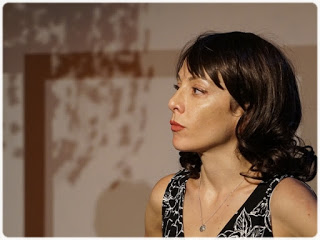
Rebel Yell: ‘Kate Nash: Underestimate the Girl’ at DOCNYCFest 2019

Over the last decade or so, singer-songwriter-actress Kate Nash has developed a reputation (and obvious penchant) for defying others’ expectations.  Filmed over five years as the British singer moved to Los Angeles and began writing and recording new music,  Kate Nash: Underestimate the Girl (which had its Stateside premiere last week at the DOC NYC Festival), chronicles a crucial turning-point in that very career.   Told in a non-linear jumble — with Nash’s music providing commentary along the way, accompanied by brilliantly animated sequences — Underestimate the Girl is a far cry from the uplifting, carefree, punk-rock comeback story filmmaker Amy Goldstein and her subject originally intended, turning instead into a cautionary tale.

When Kate Nash came out with her iconic track “Foundations”over a decade ago, she was one of many that were creating something different within the then-current musical climate.  The mid- to late-2000s and into the early-2010s saw the debuts of what many dubbed the next-gen British Invasion, which featured, as Nash herself once described as “lots of British artists being British”.  Armed with distinctive voices and honest, incisive lyrics set against sounds that were at once experimental and nostalgic, artists such as Adele, Lily Allen, Paloma Faith, Florence and the Machine, Marina and the Diamonds, and even the late Amy Winehouse were all changing the game, despite their seemingly similar female-ness (Nash would later famously state at the Brit Awards: “Female isn’t a genre”). 

Indeed, it was an interesting time for music, and with this new generation of artists also came the advent of the Internet and its intangible power and reach.  Nowadays, in an era where digitally-native artists transitioning onto the Billboard Top 100 and shattering records with what seems the greatest of ease are increasingly becoming the norm, it’s amazing to think that just a decade ago, posting one’s music onto MySpace as many of the above did (Nash included), was considered quite a revolutionary act.

Revolutionary and revelatory it was — particularly for Nash, whose critically-acclaimed 2007 debut album Made of Bricks went to #1 on the UK charts.  She went on to tour the record, and later released her second album, 2010’s My Best Friend is You.  Using money she earned from her initial success, Nash founded a School of Rock-style program for girls (aptly called Kate Nash’s Rock ‘n’ Roll for Girls After-School Music Club), as well as funded a tour for her third release, 2013’s Girl Talk.  For a while, things were going great.

There is, however, a high price to pay for such success — one which does not always benefit those so selfless with their talents, as artists often are.  With Best Friend‘s poor sales performance, as well as a change to a punkier, more riot grrrl sound on Girl Talk, Nash would eventually be dropped from her label (via text message, no less).  To add further insult to injury, she would also learn that her then-manager had stolen money from her.  All of this, combined with her self-funded endeavors, would leave the singer bankrupt.

(In some of her lowest points depicted in the film, we see Nash selling some of her most iconic tour costumes to charity shops and working side gigs for famed, now-shuttered Meltdown Comics’ wonderfully geekier version of QVC — Han “Cholo” jewelry, anyone? — just to make the rent.)

To her credit, Kate Nash was never an artist that set out for worldwide domination; for her, it was always about the music.  “This is a matter of life and death for me,” Nash states in the documentary, “because making music keeps me alive.”  But the landscape of music had changed since 2007, and in the years she fell off the radar, Nash had to find other ways to eke out a living.  As an A&R executive friend of Nash states in the film: “What worked ten years ago isn’t relevant now.”

Or, at least, not in the same way it used to.

Back then, the music went directly to the fans; this time, it would be the fans that would give back to the musician who always selflessly did.  In addition to signing a publishing deal to write songs for fellow artists, (as well as for commercial properties and other similar opportunities), Nash began a successful Kickstarter campaign in 2017, where she asked fans to “be [her] record label” and help fund her next album.  With this, other things began to come together, most notably, a SAG-supported role in Netflix’s GLOW — the fulfillment of a lifelong dream for the former theatre student and seemingly the well-deserved culmination of her journey into self-defiance and, perhaps most importantly, self-reliance.

While there are times when its chronology becomes hard to keep track of and therefore slightly distracting (quick-cuts of Nash and her enviably chameleonic hair as she narrates at various sit-downs with the camera certainly don’t help in this regard), Underestimate the Girl still remains a hugely important watch.  At a time where others in the industry are currently struggling for their own voice and artistic rights (Taylor Swift and adultmom, just in the past week alone), this film’s message, much like its subject, is loud and clear, simultaneously unabashed and unrelenting. 


Images courtesy of Span Productions.

If you’re in the UK, you can watch Kate Nash: Underestimate the Girl on BBC3 iPlayer (available for only five more weeks!).  Follow the film’s journey along the festival circuit; the next stop is the St. Louis International Film Festival in St. Louis, Missouri!  The filmmakers are also actively on the search for US distribution, so if it’s playing at a theatre or festival near you, let them know how you enjoyed it.  More opportunities for this movie to be screened means more opportunities for this story to be told to a wider audience.
The Great Eleven O’Clock Number

As I previously wrote:

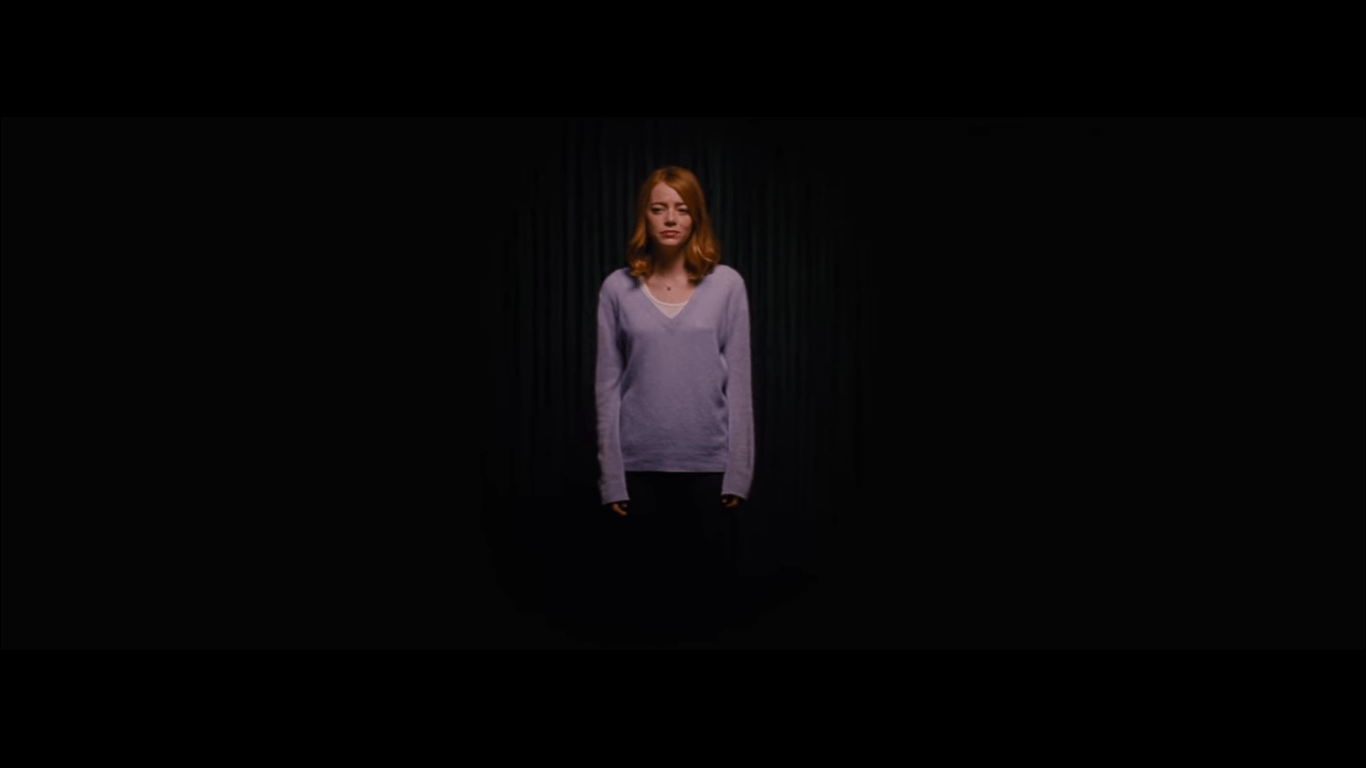
“..none [of the songs] get us there quite like its eleven o’clock number, “Audition (The Fools Who Dream)” does. It is La La Land’s most character-driven piece and undeniably its best song (despite being passed over by “City of Stars” for Best Song nominee at that year’s Oscars).” 

Featuring wonderfully-penned lyrics by Dear Evan Hansen and The Greatest Showman hitmakers Benj Pasek and Justin Paul, “Audition (The Fools Who Dream)” called to mind another song from yet another movie-musical: that of Cabaret’s eponymously-titled show-ender, penned in a similar vein by lyricist Fred Ebb, and performed by the inimitable Liza Minelli.

As noted in this post from Danny Ashkenazi’s Notes from a Composer blog, the similarities here are pretty obvious to savvy movie-musical fans, but perhaps subtler to more casual viewers of the genre. Both songs speak of living without regret, with each protagonist speaking of an inspirational, larger-than-life figure in their lives; Emma Stone’s Mia talks of a Francophile aunt, while Minelli’s Sally Bowles sings about her friend Elsie. Other similarities abound, particularly as each character begins to sing of their respective inspirations’ demises. Watching La La Land, I was tickled to hear the similarity of the lyric “She lived in her liquor/and died with a flicker” to Cabaret’s “The day she died the neighbors came to snicker/Well, that’s what comes with too much pills and liquor”.

It’s yet another great example of director Damien Chazelle’s homage to musical theatre at work.


Music to Move the Stars: Damien Chazelle’s ‘La La Land’ is a Dizzying Confection of Dreamy Nostalgia

For nearly the past twenty years or so, movie-musicals have seen a resurgence in the public consciousness.  One such film that has done so, and with as much fanfare (or perhaps even more so), is none other than Damien Chazelle’s own ambitious take, La La Land (2016).  Chazelle’s second attempt at a musical (after his debut Guy and Madeline on a Park Bench [2009]) and the third in an informal trilogy centered around jazz (along with Guy and Madeline and the Oscar-winning Whiplash [2014]), La La Land is perhaps best known for its controversial and precedent-setting tie for Best Picture with fellow nominee Moonlight at the 2017 Oscars (the honor would eventually go to the latter film).  Despite this, the film garnered a record-tying fourteen nominations (alongside classics Titanic and All About Eve) and five Oscar wins that year, and seemed universally hailed as the ode to the grand movie-musical productions of yesteryear.  

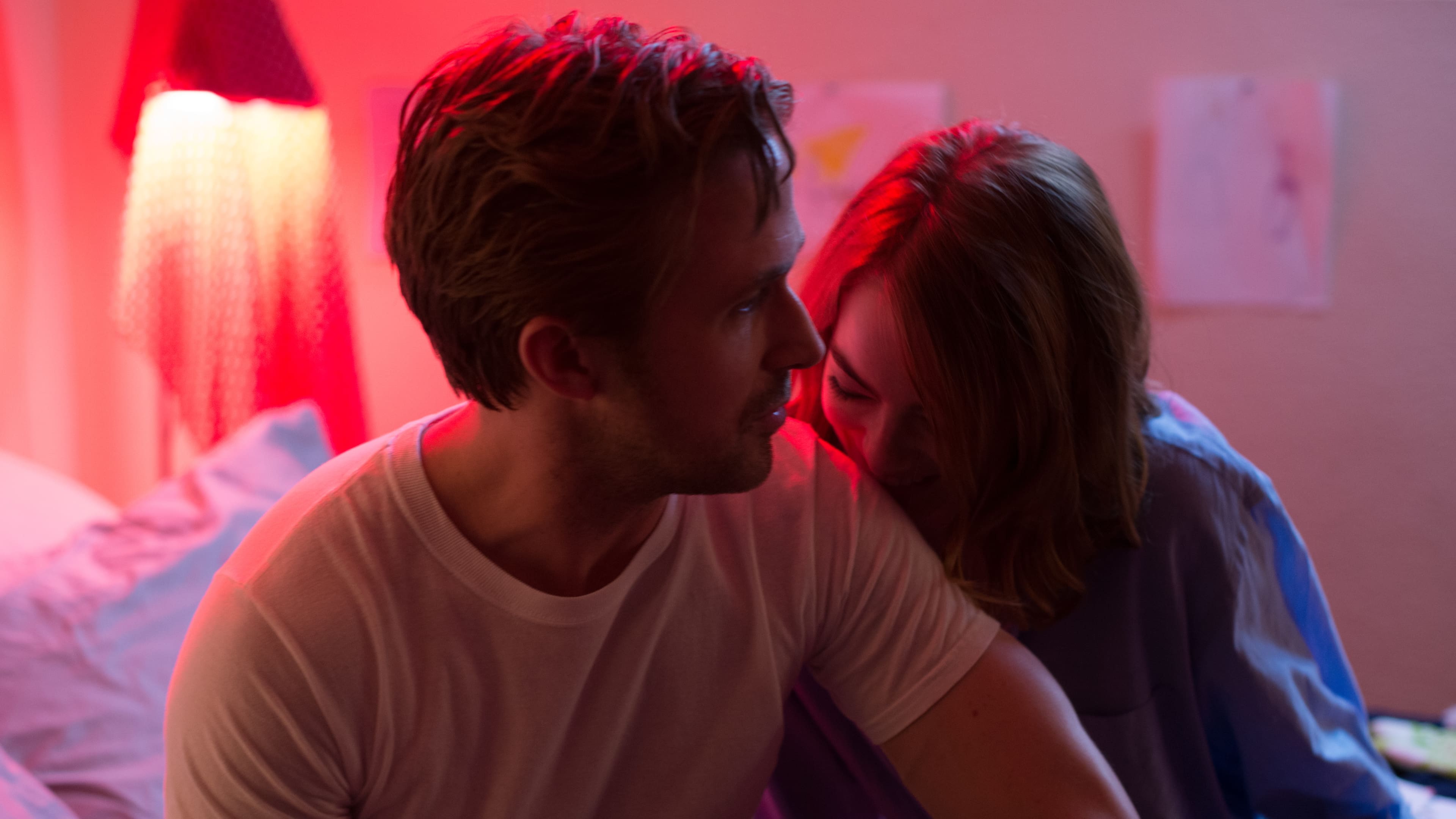
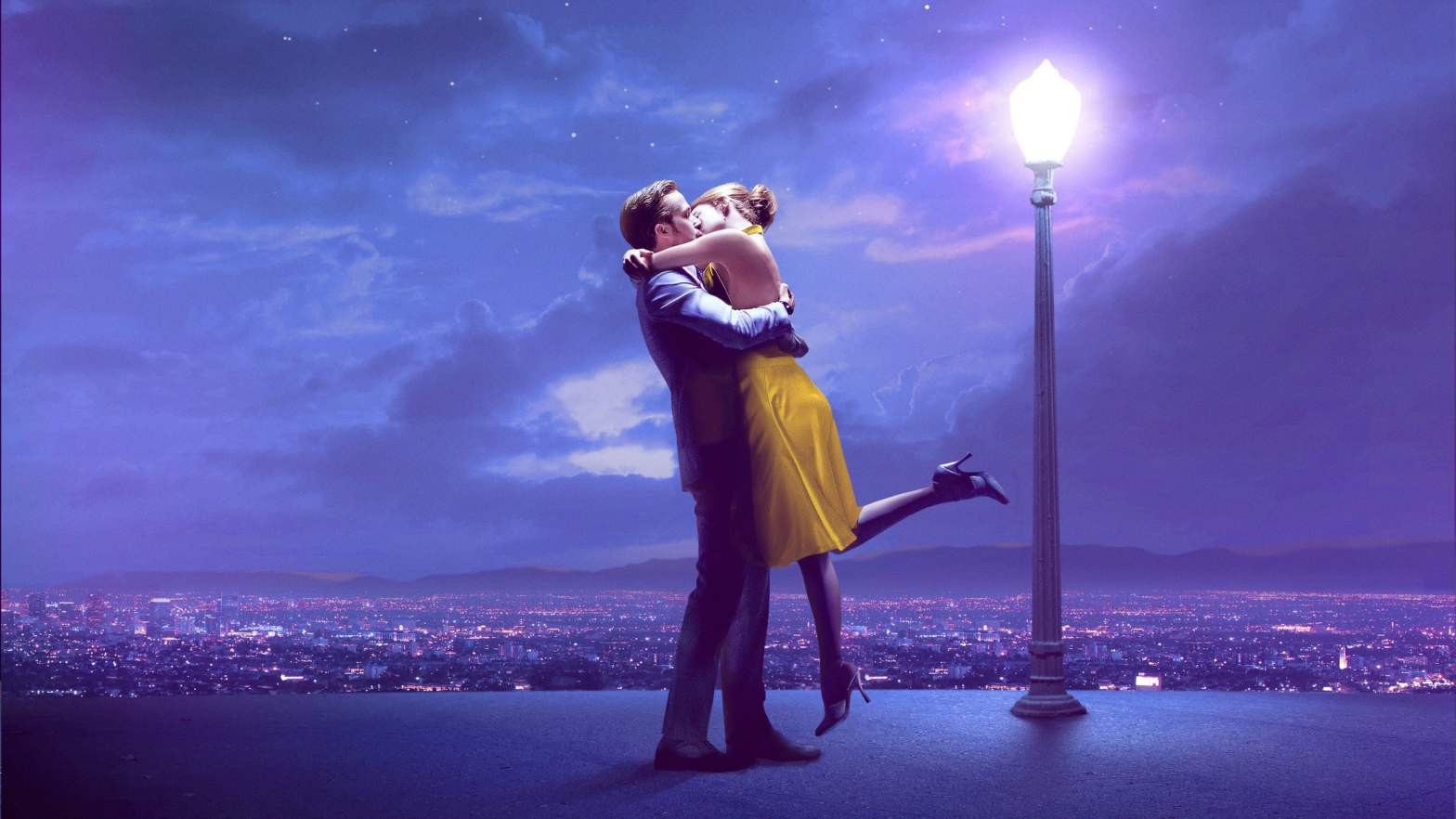
La La Land follows two young Angelenos as they struggle to follow their respective dreams: Mia (Emma Stone), an aspiring actress who, between auditions, makes ends meet as a barista at a café in the Warner Bros. lot; and Sebastian (Ryan Gosling), a jazz purist musician who moonlights as both a jukebox pianist at a restaurant and as part of an eighties tribute band (the latter much to his chagrin).  After they meet not-so-cutely at a traffic jam (that most quintessential of Quintessential Los Angeles Locales), Mia encounters Seb again at the restaurant, and yet again at a party Seb’s band plays at.  Over the course of the first act, they start to get to know another, each sharing their individual hopes and dreams.  Snippets of their brief but heady summer romance are heightened through sweeping instrumental sequences and montages (this one taking place at the Griffith Observatory is particularly breathtaking), and when they — spoiler alert! — eventually part ways, we as the audience are heartbroken. Boy-meets-Girl, Boy-falls-in-love-with-Girl, Boy-eventually-loses-Girl.

Admittedly, the film lives up to (some) of its hype.  As the title suggests, La La Land is as dreamy a confection as could possibly be whipped up onscreen: a dizzying whirl of large-scale chorus numbers packed with nostalgic old-school romance (and even old-schoolier, if problematic, notions of jazz).   Just in case you didn’t get the hint already, the film shows you the first of many cinematic vestiges it’ll pay homage to over the next two hours: that of a widescreen title card touting the old Cinemascope logo, setting the tone for what’s to come.  From then on, it’s a flurry of visual allusions to the cinema of olde, with nods to Hollywood’s Golden Age of musicals on film: An American in Paris (1951), Funny Face (1957), A Star is Born (1954), Singin’ in the Rain (1952), West Side Story (1961), Sound of Music (1965), and Cabaret (1972) all get their due here; not to mention the offbeat musicals of the French New Wave, such as Jean-Luc Godard’s Une Femme est Un Femme/A Woman is a Woman (1961), and Jacques Demy’s The Umbrellas of Cherbourg (1964), and The Young Girls of Rochefort (1967).

Of these, it is perhaps Demy’s The Umbrellas of Cherbourg (along with Vincente Minelli’s An American in Paris), which proves to be the strongest influence on La La Land; not only in its storyline but in its music, as well.  Most of the cues taken from Umbrellas are, obviously, the influences of jazz within an operatic structure: Demy’s film (the score for which was composed by the late, great Michel Legrand) is entirely sung-through, punctuated by throaty brass riffs and off-kilter drum beats during moments of high emotion.  It’s this juxtaposition between the old and the new which Chazelle and composer Justin Hurwitz (previous collaborators on both Guy and Madeline and Whiplash) clearly try to replicate in La La Land, if in a much different way.

Traditionally, musical theatre utilizes music either as a tool to help push the story along, or to propel the fullest expression of a character’s innermost thoughts and feelings, when mere action simply cannot.  There are a couple of pieces that do follow this important tenet, as in the case of ‘A Lovely Night’, a flirty tune that hearkens back to the old “I-Like-Ya-But-I-Ain’t-Tellin’-Ya” musical theatre trope.   However, if we’re talking about expression through song, none get us there quite like the film’s excellent eleven o’clock number, ‘Audition (The Fools Who Dream)’.  Featuring wonderfully-penned lyrics by Dear Evan Hansen and The Greatest Showman hitmakers Benj Pasek and Justin Paul, it is La La Land’s most character-driven piece, calling to mind Cabaret’s own passionate, eponymously-titled closer, and undeniably its best song, despite ‘City of Stars’ lamentably chosen as the film’s Best Song nominee.  

©️ tmbd.com

Other musical moments worthy of mention in La La Land (and which duly pay further homage to the movie-musical traditions it pulls from) include: ‘Summer Montage/Madeline’, which bears hints of the ‘A Basal Metabolism’ scene in Funny Face; as well as ‘Epilogue’, a hazy dream sequence which not only makes further blink-and-you’ll-miss-it visual references to Funny Face, but also wonderfully evokes the famous dream sequences from both An American in Paris and A Star is Born,‘Rhapsody in Blue’ and ‘Born in a Trunk’, respectively.

Mostly, the music in La La Land works to softly underscore the overall feeling of romance blossoming between the two lovers.  Many of its instrumental pieces, performed by Hurwitz on the piano, do so to great effect.  In particular, ‘Mia and Sebastian’s Theme’, an elliptical, beautifully lilting piece which memorably accompanies the characters’ journey in following their dreams and, hopefully, each other.  Its melody, just like their relationship, seems it might go on forever — that is, until it doesn’t.  Just as with the instrumentals, songs like ‘City of Stars’ — a melancholy duet between Mia and Seb about the heartbreak of ambition in Los Angeles — attempt at some reflective moments, while other songs seem to merely be there to help to establish a time and place or to convey a mood, as in the case of opener ‘Another Day of Sun’.   

The John Legend-led track ‘Start a Fire’ is a straggler, both in terms of its obvious “jazz-pop-fusion” style and in its ability to highlight the characters’ evolving relationship, if deceptively so.  By this point in the film, Seb has accepted an offer by his old friend Keith (played by Legend) to join his band on tour as keyboardist, if a bit reluctantly.  Not only does he have the defense of his purist principles to think about (to which Keith says: “Jazz is about the future”), but there’s also the question of Mia, with whom Seb has now progressed into a live-in relationship.  Still, with Mia’s encouragement, he takes the gig, and it is when the band are back in town that our scene takes place.  In the song’s chorus, Keith proclaims:

We can start a fire

Come on, let it burn, baby

We can start a fire

Let the tables turn, baby

We can start a fire    

It is as typical a pop chorus as any like it: repetitive lyrics rife with trite metaphorical content.  But as pointed out in an episode of the Switched on Pop podcast, the above lyrics — despite the upbeat rhythm with which they are presented — provide the perfect foreshadowing for the following scene in the film, wherein Mia and Seb have an argument.  Home for the first time in months, Seb surprises Mia with dinner at the apartment they share.  They catch up over dinner, and all is well — or so it seems.  When Seb nonchalantly mentions he’ll have to go back on tour again soon, now beholden to the album cycle of contemporary mainstream artists, Mia counters with the question of Seb’s own satisfaction with his work, asking him if he even likes the music he’s playing.  As the argument reaches its apex, the food Seb is still cooking in the oven burns.  Let the tables turn.  Let it burn.

A pretty straightforward reading of a not-so-straightforward song, to be sure, but it marks a turning point in the film’s main thematic arc — and gets to the heart of what makes this movie musical slightly different than its canonic predecessors.  By all appearances, Mia and Seb’s relationship seem poised to follow the fate of the Star-crossed-Lovers trope found in practically every love story since time immemorial.  That they do — however, what makes this story interesting for today’s audience is that the conflict over which the relationship ultimately deteriorates is not that of love for someone else, but rather the love of something else.  

Or, as A.O. Scott put it in his Times review of the film, their romantic dilemma falls under Love versus Ambition:

The real tension in “La La Land” is between ambition and love, and perhaps the most up-to-date thing about it is the way it explores that ancient conflict. A cynical but not inaccurate way to put this would be to describe it as a careerist movie about careerism. But that would be to slight Mr. Chazelle’s real and uncomfortable insight, which is that the drive for professional success is, for young people at the present time, both more realistic and more romantic than the pursuit of boy-meets-girl happily-ever-after. Love is contingent. Art is commitment.”

In this regard, as pointed out by Genevieve Koski in an episode of her podcast The Next Picture Show, the film perhaps more closely owes its debt to American in Paris, wherein the titular American Jerry Mulligan (Gene Kelly) finds himself having to choose between a life of literal security with patron with would-be paramour Milo (Nina Foch) — or go back to his old bohemian lifestyle in order to be with his true love, Lise (Leslie Caron).  And unlike this past year’s hit remake, the Bradley Cooper- and Lady Gaga-led A Star is Born (wherein the two main characters choose both Love and Ambition, to ultimately tragic consequences), La La Land’s characters ultimately choose not each other, but their individual dreams.

This, for all its unabashed affection for the long-lost romanticism of Hollywood’s golden age, is how La La Land sets out to place itself among the 21st-century canon.  Wherever its merits as a movie-musical stand, it is this emotional juxtaposition which at the very least has made much of the film’s surrounding attention just this side of justifiable.  Call it, perhaps, the most Millenial movie-musical of the decade thus far (with the possible exception of Jason Robert Brown’s cult 2001 hit, The Last Five Years, adapted to film in 2014): where the hopes of today’s youth dwell in dreams more down-to-earth, rather than up high in the starry-eyed rapture of true love.      

The Pulchritude of Fosse, Revisited: A Look at Those Famous Jazz Hands—Step-by-Step, Inch-by-Inch, Frame-by-Intoxicating-Frame

According to Merriam-Webster’s online dictionary, the word pulchritude (one of my personal favorites) is defined simply as ‘physical comeliness’ — and if there is anything that fits that description, it’s director-choreographer-auteur Bob Fosse and his distinctive choreography.  Known now for its emphasis on rounded shoulders and isolated movements, Fosse’s choreography was inspired by what he felt were his own physical shortcomings, which he later spotlighted in his always alluring and always provocative signature style.  Little did he know that as a result, this slight re-contextualization of his supposed imperfections would not only go on to challenge notions of sexuality, conformity, and art but also inspire a bevy of devotees decades later.

In an essay which appeared in the accompanying booklet for the Criterion Collection edition of Fosse’s penultimate and most ambitious work, All That Jazz (1979), New Yorker writer and critic Hilton Als wrote the following:

In any case, Fosse’s imitators are legion; that’s what happens when you give your life to learning something about your own ultimately unexplainable genius.  It must have seemed as if no time had passed, as he lay dying, between that moment and being a boy in Chicago, a born choreographer who worked so hard to articulate, through all those bodies that passed before his discerning, worried eyes, what a shrug meant, what a slide meant, how to contract and then extend in a world that was constantly contracting and extending past the point — seemingly — of human endurance, all the while holding up your gloved hands, those famous Fosse hands, ten digits that, more often than not, the choreographer made look like the instruments that committed original sin, hands that were always grasping for something more dangerous than love, even though there is nothing more dangerous than love, maybe an attitude, one that said, “I don’t care, fuck it.”

It is this exact talent for turning expectations on their head which Fosse later extended into his film-making. From his artful displays of a group of flirtatious taxi dancers in his directorial debut, Sweet Charity (1969); to seemingly cheery vaudevillian numbers satirizing the Nazi regime’s rise to power in Cabaret (1972)’s Weimar-era Berlin; culminating in the harrowing image of a body bag zipped up to Ethel Merman’s rendition of “There’s No Business Like Show Business” in All That Jazz — Fosse found how to make the camera dance, in ways that still very much resonate today.  

In fact, one can still see remnants of his influence in modern pop culture — from musical theatre (1996’s Rent, the 2002 Oscar-winning film version of Chicago) to film (2000’s Center Stage, 2006’s Marie Antoinette) to even the realms of pop music (Beyoncé, Christine and the Queens), many are still paying their homage to the late director-choreographer, who died suddenly in 1987.  Most recently, Fosse’s legacy has continued on with the Lin-Manuel Miranda-produced FX limited series Fosse/Verdon, the season finale of which aired just this week.  Centered around Fosse and his wife and muse, dancer-actress Gwen Verdon and stars Academy Award-winner Sam Rockwell and Academy Award-nominee Michelle Williams as Fosse and Verdon, respectively, the show chronicles the couple over the course of their rocky-but-passionate fifty-year marriage.  

I haven’t gotten to check out the show during its original airing, so I’ll definitely be spending the next couple of weeks binging it — and then re-visiting Fosse again with the clips below!  Like Roy Scheider famously said in All That Jazz: “It’s Showtime, folks.”

“Who’s Got the Pain?” (ft. Gwen Verdon), Damn Yankees (1958)


“Big Spender”, Sweet Charity (1969)


“Mein Herr”, Cabaret (1972)


“Everything Old is New Again”, All That Jazz (1979)


“Take Off With Us”, All That Jazz (1979)


“All That Jazz” (ft. Carly Hughes, Jennifer Nettles and Company), Chicago on Broadway (2015)

“All That Jazz” (ft. Catherine Zeta-Jones and Renée Zellweger), Chicago on film (2002) 


“It’s Showtime, folks” triptych, All That Jazz (1979)

“Dressing Ceremony” triptych, Marie Antoinette (2006)

“5 Dollars” by Christine and the Queens, Chris (2018)


“Rich Man’s Frug”, Sweet Charity (1969)

“Get Me Bodied” by Beyoncé, B’Day (2006)

A Diamond in the Rough: Marina’s ‘Love + Fear’ Explores Multiple Facets of Human Nature

For singer-songwriter Marina Diamandis, it seems as if her identity has forever been inextricably linked with her music.  When she arrived on the scene with her 2010 debut The Family Jewels she was known then as Marina and the Diamonds,  a moniker which suggested the idea of a band — perhaps one similar to the glam-pop and -rock acts of the late ‘70s and early ‘80s — despite being, in fact, a solo act.  (The Diamonds, she would later explain, referred not to her backing band but, rather, her fans.)

This playful duality even seemed to be embodied in Diamandis herself: half-Greek, half-Welsh; elegantly beautiful, yet often dressed in outfits emblazoned with various pop-art iconography.  It’s a look crafted to reflect The Family Jewels’ themes of commercialism and society’s toxic obsession with fame (the album cover itself serves as an ode to Andy Warhol’s own covers for Interview magazine).  When she wrote her song, ‘Mowgli’s Road’, wherein she sang, “There’s a fork in the road/ I do as I’m told/ ‘Til I don’t know, don’t know, don’t know/ Who, who I wanna be”, the artist who would later be known as MARINA could not have possibly fathomed just how many iterations of selves she would eventually take on in the course of her career.   

Dualisms continue to abound in Diamandis’ latest effort — most obviously in the title itself: LOVE + FEAR.  Split into two parts, the double-album (each part capping at 8 songs) is the singer’s most ambitious project since perhaps her 2012 concept album, Electra Heart (for which she literally took on the role of her eponymous alter-ego: a theatrical, platinum-coiffed figure whose guise and impending downfall was inspired by similarly tragic figures such as Marilyn Monroe and Marie Antoinette).  The conceit for LOVE + FEAR takes its cues from a quote by the psychologist Elizabeth Kübler-Ross:

“There are only two emotions: love and fear. All positive emotions come from love, all negative emotions come from fear. From love flows happiness, contentment, peace and joy; from fear comes anger, hate, anxiety, and guilt. It’s true that there are only two primary emotions, love and fear. But it’s more accurate to say that there is only love or fear, for we cannot feel these two emotions together, at exactly the same time. They’re opposites. If we’re in fear, we are not in a place of love. When we’re in a place of love, we cannot be in a place of fear.”

Thus, Diamandis built each of the songs around LOVE + FEAR with Kübler-Ross’ quote acting as a writing prompt of sorts.  What results is a study of both the personal and the universal, in a way we hadn’t yet heard in Diamandis’ music — a direction many of her Diamonds had been anticipating since 2015’s FROOT.  True to its name, FROOT had been universally acclaimed by fans, Stans*, and critics alike as Diamandis’ most cohesive and substantial body of work at the time of its release.  

In an article for NYLON magazine that year, Phoebe Reilly had written: “In many ways, Froot feels like the natural follow-up to Family Jewels, except that her debut captured the yearning of a woman fresh out of her teens.”  Indeed, combining her signature mix of New Wave-inflected synth-pop and metaphor-laden wordplay, Diamandis certainly looked to be hitting a maturation point as a songwriter.  Songs such as ‘I’m a Ruin’ and ‘Weeds’, for example, spoke of heartbreak for Diamandis — as opposed to being the heartbreaker herself. In that same article, Diamandis had said of FROOT: “This is a lifetime record for me.  I don’t think I’ll do anything of this ilk again.”

That said, LOVE + FEAR is her attempt at doing so.  

Structurally, each side of LOVE + FEAR certainly achieves a sense of sonic chronology, reinforcing the feeling of the two titular emotions actually being at opposite ends of a spectrum, instead of two disparate entities, as Kübler-Ross’ quote suggests.  It is here that duplicitous dualisms once again find us, and where the album’s ultimate strength lies. For example, songs such as ‘You’ and ‘Superstar’ (which each feature on FEAR and LOVE, respectfully) are deceptively written, as if each could actually belong on the other’s half of the album.  ‘Superstar’ is about putting love up on a pedestal, to an almost idol-worship extent; whilst ‘You’, perhaps the most romantic song on FEAR, speaks of the destructive way the other can manipulate that love.  The former is lyrically sparse, considerably downbeat and ambient; meanwhile, the latter’s lyrics are contrasted nicely against an upbeat production.  

Other similar parallels between her past and current bodies of work abound: ‘Handmade Heaven’ and ‘Enjoy Your Life’, both evoke FROOT’s ethereal nostalgia; whereas other tracks like ‘Life is Strange’ and ‘Karma’ contain unusual production choices similar to The Family Jewels (Strings! Layered harmonic vocals! The “Oh my gawd!” of it all!).  In ‘Human’ and ‘Emotional Machine’, Diamandis continues in her tradition in examining the different sides of human nature, a tradition which started in ‘Savages’ and ‘I’m Not A Robot’.  The parallels in both ‘Savages’ and ‘Human’ are perhaps the most apparent: while she states in the former, “I’m not afraid of God/ I’m afraid of man”; she goes on to say, “And if there is a God,/ they’ll know why it’s so hard/to be human” in the latter.  

Despite all these familiar echoes, much of LOVE + FEAR’s sound has seen Diamandis shedding her signature sound and pushing towards more Top-40-friendly pop, as heard in the summery ‘Orange Trees’ (inspired by childhood summers spent on the Greek island Lefkáda), and in the guitar-driven Latin sounds of ‘Baby’. While hints of this new direction have been evident in recent collaborations with the group Clean Bandit in the years during her hiatus, it’s still a surprising turn for an artist who had previously spoken about her negative experience recording Electra Heart with high-powered American producers whose job it was to “find the new sound.”

Whether this will have the same alienating effect on her fans in the way Electra Heart had is hard to tell. For now, it’s clear that LOVE + FEAR, in all its aspects (even its album covers convey the singer without makeup, against a simple grey backdrop) sees Diamandis emerging anew as an artist without all the extra frills. It’s the idea of laying oneself bare in order to finally find love in another — and in oneself. After all, as she sings in ‘Soft to be Strong’: “There’s no shame in being sincere.”

Sorry! This product is not available for purchase at this time.

Images courtesy of Atlantic Records UK.

The Star Who Fell to Earth: Christine and the Queens Showcase Their Mettle at Brooklyn Steel

Many might claim Christine & the Queens’ frontwoman, Héloïse Letissier, as many things.  She’s Jacques Brel and the Cocteau Twins, with a bit of David Bowie and Laurie Anderson thrown in for good measure.  She’s Bob Fosse and Pina Bausch reincarnate — or better still, Michael Jackson and Beyonce’s long-lost, would-be French love-child (apologies to Jay-Z).  A simple YouTube search and mere glance at myriad comments by her loyal constellation of fans across the interwebs would confirm her as such.  If one were to take a closer look among the expansive galaxy of CATQ performances for an example (or 1,350,000), one would look no further than those taken back when she landed onto the music scene with her 2014 debut, Chaleur Humaine.

One such video in particular, that of a performance at the We Love Green festival in Paris, might confirm such exclamations.  Here, the eponymous Christine and her accompanying dancers give a stunning performance of the show’s opener, “Starshipper” — all whilst dramatically draped under a blinding spotlight or two.  A deep electronic drone ensues, soon to be followed by light and steady percussion. The words are initially in French, but no matter — by the time Christine finally utters English in the song’s pre-chorus and chorus, it is clear that something interesting is at work here:

If everyone is a disguise,

I choose my own way to arise.

I wanna be a male bomber,

I wanna be a starshipper. 

As the sweeping music rings out and builds up to a satisfying climax, one can do nothing but marvel at this sight — that sight, of course, being that of the slight, gamine frame of Christine herself.  Anyone randomly coming across such a performance would perhaps meet it with more than a bit of confusion.  Who is this so-called Starshipper onstage, this tiny French thing with the huge presence?  This is just what I wondered myself just a little over a year ago, when I started listening to CATQ’s music.  Fast-forward to earlier this month at the Brooklyn Steel (the second of a sold-out two-night run), where a friend and fellow concertgoer found herself wondering the exact same thing out loud.

The truth is, she is all of the above — and at once, none at all.  It is perhaps more appropriate to say that Chris is a creature not of this world, yet one also borne from that most earthly of natural afflictions — heartbreak.  As described by Laura Snapes in her 2016 article for The Guardian:

“In 2010 she took herself to London. In Soho, she stumbled into gay club Madame Jojo’s (since shut down) and watched a shambolic drag act. The three queens adopted this agonised waif, teaching her that threatre could be anything at all; to bend rules, rather than fulfil them. They encouraged her to adopt a persona and write songs, and dismissed her self-pity.” 

And thus, Christine and the Queens was born. For Chris, the French electro-pop act’s new album and accompanying persona, Letissier cuts a different, but no less striking, silhouette on the Brooklyn Steel stage compared to her previous iteration.  In a look she debuted earlier this past summer in French cult magazine Egoiste, she has now chopped off her hair into a boyish pixie cut; and, in lieu of the penny loafers and slim monochromatic pantsuits she once donned, she is now outfitted in sneakers, baggy pants, tank tops — and yes, that now-infamous Red Shirt.  Taking familiar cues from Bad- and Dangerous-era Michael Jackson of the early- to mid-90s, the evolution of Christine-to-Chris perfectly marries the masculine and the feminine with as much ease as it takes to flex her arm or sway her body.

And, boy, is there a lot of body-swaying.

Indeed, the choreography in her current act, conceived in collaboration with contemporary dance collective (LA) Horde, is gender-fluid in its presentation; much rougher and rawer in quality compared to the abstract, modern dance-inspired movements of the past, as exemplified in the music video for her hit “Tilted” (the original choreography for which — along with other fan favorites — has been kept intact, much to the delight of the crowd and this writer*).  If Christine’s Chaleur Humaine era was about a longing for a sense of self and feeling comfortable in one’s skin (or ‘feeling oneself,’ as it were), Chris is all about finding it and flaunting it. Embodying a different kind of swagger, Letissier and her dancers take the stage in brutish, angular movements, enacting scenes of street fights in “Comme si”, “Girlfriend”, and “The Stranger”.

Complimentary to much of this bravado are the softer, more lyrical elements incorporated into the choreography. In one standout moment during “5 dollars”, Chris’ dancers jump and leap in a circle around her, all against a large backdrop of crashing waves behind them.  It is a moment of pure, unadulterated joy and elation, understated in its beautiful portrayal of contrasting strength and serenity. Another stunning number has her alone on the stage — in a simple black sports bra, sans red shirt — swaying to an equally-stunning, rhythmic remix of her song “Here”. In this moment, what was originally melancholic longing in Christine has now become full-blown desire in Chris.

Despite this seeming confidence in her present self, Chris makes sure we know that she hasn’t quite forgotten all the above-mentioned that went into the making of her past self.  As in her Chaleur Humaine showcase, Chris still unabashedly wears her influences on her (now very muscular) sleeve.  While she pays homage to her time in the clubs with various house music medleys (including snippets from the soundtrack of the cult documentary Paris is Burning and 90s hits like “Pump Up the Jam”) and covers of Christophe, Kanye West (“Paradis Perdus”), and Michael Jackson (“Who Is It”) in her 2015 repertoire, snippets of Queen’s “Radio Ga Ga” and Janet Jackson’s “Nasty” can be heard in her current show. Unsurprisingly, the King of Pop makes another musical cameo when, after an a capella version of “Nuit 17 a 52”, Chris breaks out into her own rendition of “Man in the Mirror” (a choice which, if one were to take the previous song’s music video into consideration, quite appropriately reflects the constant questions of gender the artist herself often poses).

She then goes on to end the night with a performance on a small stage in the middle of the crowd (pictured above), Chris forgoes her red shirt — and, indeed, sheds any other expectations of what she might be—man or woman, homo-, hetero-, or pan-—and simply chooses to sing her heart out. As she moves from the evocative “Saint Claude,” and into the crowd with the pulsing dance beats of “Intranquillite”, it feels as if the power of her vocals might be able to reach the heavens. It is music to move the stars, with us moving along with them.

Like all those who shone before her, we may never truly know the extent of loss and heartbreak, longing and desire, joy and elation driving the bright, energetic force behind Letissier’s Chris(tine).  The only thing we can really do is watch in awe and thank our lucky stars we’re able to do so.


Image courtesy of the author.

*Apologies to the Guy-Who-Stood-Next-To-Me — and Guy-Who-Stood-Next-To-Me’s friends — who unwittingly became casualties of my horrible attempts at singing and dancing along up in the Brooklyn Steel balcony!  (One thing’s for sure: I am definitely not as cool as Chris.  Quelle dommage!)

Marina & the Diamonds, Revisited: Sampling the ‘Froots’ of Her Ouvre

Longtime followers of mine will know how long I’ve been a fan of Marina & the Diamonds, and perhaps it’s no wonder.  Like the neon garden world of her last outing, fittingly titled Froot, Diamandis has managed to grow into her own as an artist. As a fellow fan phrased it: “You’re lucky to be on the same shelf as Marina.”  Indeed, with each album, Diamandis has tackled a myriad of complex subjects, as both social commentary and a result of pure artistic expression.  From ruminations of fame (“Hollywood”), consumerism (“Oh No!”), body image (“Girls”), and self-confidence (“I Am Not A Robot”) in 2010’s The Family Jewels; to the breaking down of female archetypes in popular culture, such as the “Primadonna” and “Homewrecker”, in 2012’s Elektra Heart; to reflections on societal ills (“Savages”), relationships (“I’m a Ruin”, “Weeds”), mortality (“Immortal”), and everything in-between on her abovementioned 2015 effort.

This trifecta of eras up to now has felt like the perfect musical reflection of each stage of life — hers, and somehow mine, as well.  With that in mind, I’m excited to hear what this next chapter will blossom into.

I’M NOT A ROBOT The Family Jewels, 2010
HOLLYWOOD The Family Jewels, 2010
PRIMADONNA Elektra Heart, 2012
LIES Elektra Heart, 2012
I’M A RUIN Froot, 2015
FORGET Froot, 2015
BLUE Froot, 2015
FROOT Froot, 2015
Handmade Heaven Love + Fear, 2019
TO BE HUMAN Love + Fear, 2019


Photo ©️ Charlotte Rutherford.

Twee and Twang: Stuart Murdoch’s ‘God Help the Girl’ is a Delightful Burst of Quirk

Some of you already know how much I love my movie-musicals — and recently, I’ve become very much obsessed with one in particular that I’ve been meaning to see for a while now: God Help the Girl (2014).  The brainchild of Belle & Sebastian musician Stuart Murdoch, the film also happens to be the offshoot of an eponymous side project, also created by Murdoch.  Over the years, as Murdoch began to write songs which were more suited for female voices and therefore didn’t quite have a place within the B&S ouevre, the idea of a concept album and accompanying film began to form.  

It was then that he took out an ad for female singers (as captured in the four-part documentary, Girl Singer Needed) — after which vocalists Catherine Ireton, Celia Garcia, Alexandra Klobouk, Brittany Stallings and Dina Bankole, among others.  What resulted then was a string of beautifully composed retro, girl group-style songs spanning a variety of genres — all illustrating an abstract story surrounding a girl named Eve, the ‘Girl’ of the project’s title. 

A few years after the album came out in 2009, a crowd-funding campaign on Kickstarter helped to finally, er, kickstart the film idea into motion.  It was released in 2014, and centers around Eve, an Australian girl suffering from anorexia nervosa, who escapes the psychiatric ward and absconds to the city of Glasgow to pursue her love of music and songwriting.  Along the way, she meets musician-slash-lifeguard James and his music student Cassie.  The three, each at a different crossroads in their life, begin a friendship around a shared love of music and decide to form a pop group. 

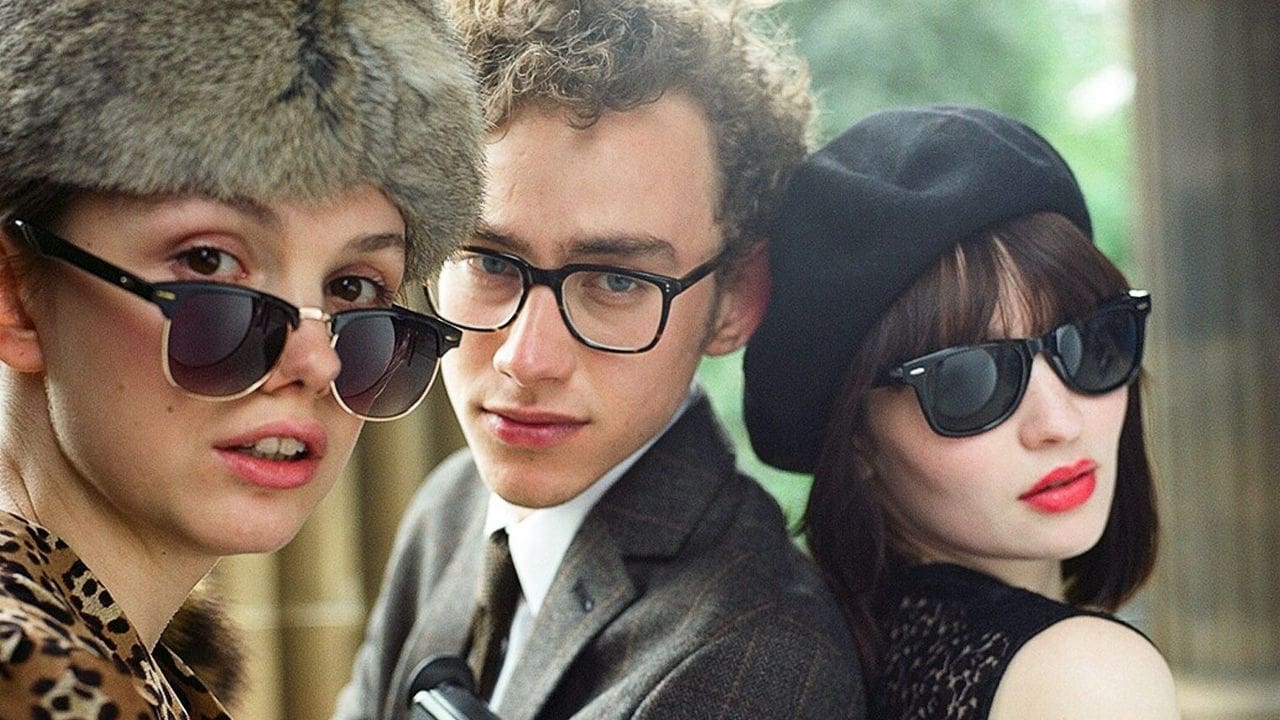
What results is a delightful flurry of quirky whimsy and bittersweet melancholy — with a huge dose of ear candy thrown in for good measure, of course.  Every second on the screen seems filled to the brim with aesthetically pleasing cinematography, along with the equally pleasant (and surprisingly so) vocal stylings of the film’s three ineffably charming leads.  As the titular character, Emily Browning embodies Eve with a depth of emotion evident in both her acting and her wispy lilt of a singing voice; while Olly Alexander (already a known musical talent in his own right with his band Years & Years) is perfectly awkward as James.  Reprising yet another role onscreen as a girl named Cassie, Hannah Murray continues to extend the same kooky-yet-ethereal quality in this film as she did with her similarly-named character in the television drama Skins.

Serving as perfect accompaniment to its homage to mid-century pop, the film playfully nods to iconic images of the past — particularly that of films of the era.  The most obvious of these is Browning herself, who is practically a modern-day dead ringer for Anna Karina — famed wife and muse to French New Wave director-auteur Jean-Luc Godard.  (Other visual references at play refer to Jacques Demy’s Young Girls of Rochefort and the Beatles’ Hard Day’s Night.) Murdoch not only turns one’s eye toward the beauty of his characters but also his native Glasgow.  While one might not immediately associate the city with particularly picturesque landscapes, the first-time director achieves just that with his portrayal of rivers, grassy hillsides, and moody city life.  In the end, it is a film which portrays a Scotland that is just as beautiful and multi-dimensional as not only the characters inhabiting it, but also the music which underscores it.


Images courtesy of Metrodome.

The Pulchritude of Passion: Wong Kar-Wai’s ‘In the Mood for Love’ and Luca Guadagnino’s ‘I Am Love’ Showcase Beauty in Tragedy

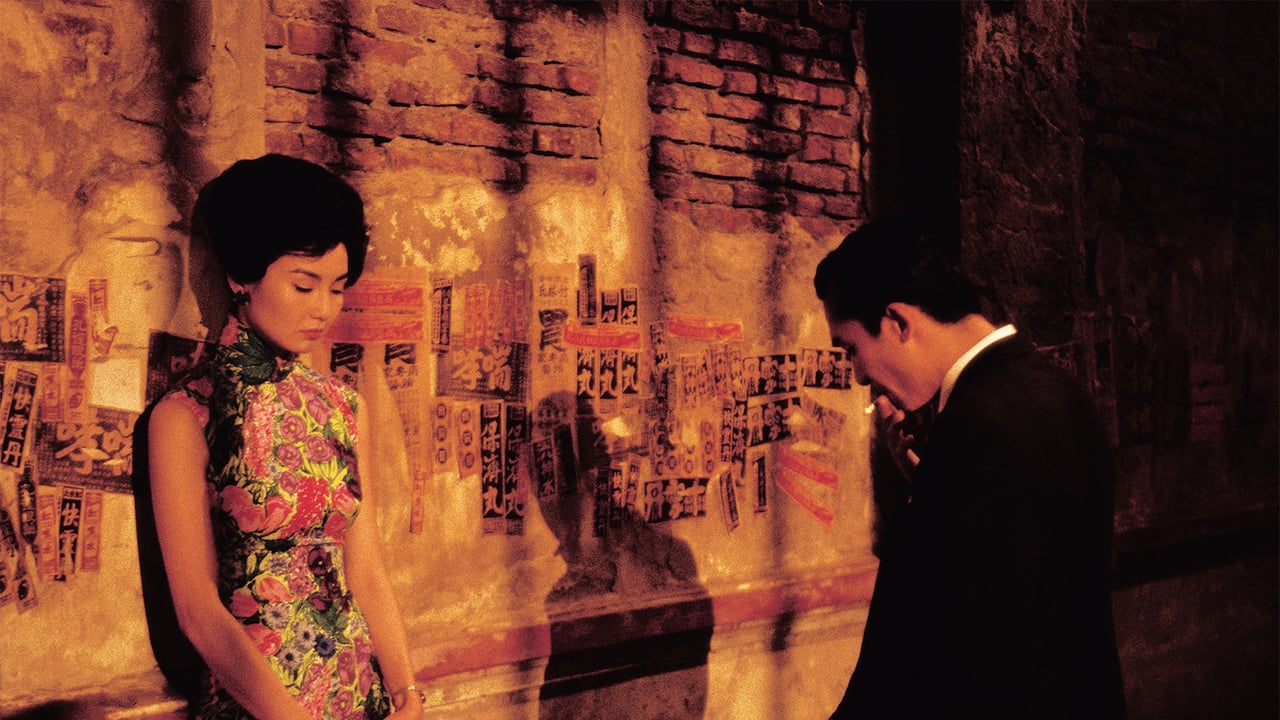
There’s no question about it: I am a very visual person.  As this blog will certainly attest to, it’s perhaps no surprise that the films I gravitate towards are ones that not only strike the viewer emotionally, but also aesthetically.  In this edition of #FilmStrips, we’ll be looking at two films that do just that — and memorably so: Wong Kar-wai’s In the Mood for Love (2000) and Luca Guadagnino’s I Am Love (2009).  Through the use of strong audio-visual cues – intertitles, vibrant images that seem to spill off the screen, and sweeping music — all set against the lush backdrops of Hong Kong and Milan, In the Mood for Love and I Am Love both provide a breathtaking view at love’s potent power.

The Body Keeps the Score: Marta Mondelli’s ‘Toscana, or What I Remember’ Exercises Some Muscle Memory

For many, memories can be a wonderful thing.  They have the ability to transcend time and space — perhaps to when things were simpler or more innocent.  For others, they can often leave one paralyzed in more ways than one, stuck on a never-ending loop.  In the case of Marta Mondelli’s Toscana, or What I Remember, it is the latter which seems to hold its grasp around the character Emma (played by Ms. Mondelli herself).  

The picturesque backdrop of Tuscany belies the painful memories it may bring to the people in it — particularly, ex-pat Emma, who has just returned to her native Tuscany for her father’s funeral.  Upon her return, she is confronted by memories at every turn.  From the children’s bookstore she remembers frequenting as a young girl; to the bakery which once stood across the street from her hotel; to even the familiar song a young girl nearby persistently sings (much to her annoyance) — a bevy of seemingly fond childhood remembrances but which in reality are relics representative of a more troubled past.  At the receiving end of her frustration is Emma’s American husband Fred (Scott Barton), who himself is bound to a wheelchair — the result of a car accident, referred to later in the play through expository dialogue.  Between the two of them, these memories of past traumas leave their relationship stilted and in constant turmoil, both emotionally and physically.

Serving as counterpoint (as well as some much-needed comedic relief) to the veteran couple is another couple on holiday: the younger and ever-so-cheery Coles, comprised of botany professor and expert Larry (Lance Olds) and his pregnant wife Sue (Nicole Kontolefa).  The Coles, who hail from Wisconsin, find themselves abroad due to a conference Larry is attending, and in awe at everything the Tuscan countryside has to offer (much, again, to Emma’s chagrin).  The two seemingly mismatched couples clash by the pool, their differences at first much more apparent than their similarities, whatever these may be.  

After a few awkward run-ins and misunderstandings, Sue and Fred find themselves alone, pondering the mysteries of the human body, whilst Emma and Larry do the same, albeit with the latter dispensing some botanically-infused wisdom along with it.  He describes something called habituation, in which a plant learns to adapt itself to its environment:  “There is this plant that opens and closes its flowers,” he starts.  “If you drop this flower, let’s say, fifty times, the first few times the plant will take a long time to re-open its flowers.  Because that’s a new stimulus.  But on the fiftieth time, it will take only a few seconds.”

The flower within the play itself, of course, is Emma, whose own memory seems to wilt and diminish as the play goes on, the repeated stimulus of the young child’s singing constantly haunting her.  Later on, when Larry encounters her once again by the pool, he witnesses Emma engulfed in yet another memory, splayed on a lounge chair and speaking to him in Italian, clearly mistaking him for her father.  She comes to, and once again, earlier musings on the effect of memories physically and metaphysically come back into play.  As she explains to Larry, the respective translations of the Italian words for “remember” and “forget” literally describe how memories lodge themselves within us: first, acquired through your heart (ricordare), before flowing through every pore of your body, eventually evaporating from your mind (dimenticare) and into thin air.  Emma’s own tortured memories do not dissipate quite as easily and instead completely take over her.  Eventually, it is revealed that the incidents of mistaken identity between the characters aren’t just scrambled memories, but rather something far worse: a muscle memory of sorts that Emma’s body can’t soon forget…even if her mind already has.

Toscana, Ms. Mondelli’s second outing at the Cherry Lane Theatre (the first of which being the excellent The Window, which I had the pleasure of reviewing for Off Off Online here.), is yet another example of the playwright’s many strengths.  The ability to condense big ideas into an intimate piece of theatre is perhaps one of the hardest tasks any writer is given, and one which Ms. Mondelli not only tackles gamely, but also executes with ease.  Such ease depicted onstage must also be attributed to the trio of cast members at her side, whose collective commitment to their respective roles lends just the right amount of gravitas, humor and everything in between.  As a whole, Toscana is a lovely exploration into Memory and its grasp on places and people, and a piece worthy of self-exploration of one’s own.


Images courtesy of Seth Perlman.